In Evil Does Not Exist, Ryūsuke Hamaguchi depicts the silent confrontation between a rural community and a “glamping” project that threatens the environment. Through this minimalist narrative, the film resonates with contemporary ecological struggles.
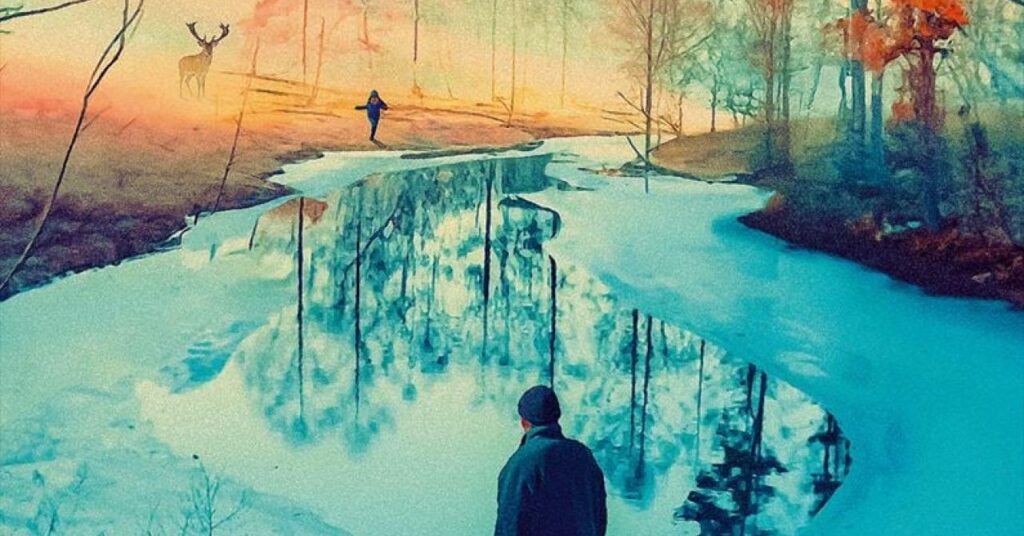
Evil Does Not Exist is a Japanese film directed by Ryūsuke Hamaguchi, released in 2023. It follows Takumi, a widower living with his 8-year-old daughter, Hana, in the peaceful village of Mizubiki, surrounded by Japanese forests. Their daily life is in perfect harmony with nature. The plot unfolds when representatives from a Tokyo-based company propose building a “glamping” site for tourists.
Glamping, a fusion of “glamorous” and “camping,” is essentially luxury camping. Experience the great outdoors and wilderness with all modern comforts—lavish yurts, high-end barbecues, and 24/7 security. The residents of Mizubiki, a small rural community near Tokyo, have never heard of it. They cautiously welcome the real estate developers who present their project to build the resort in the nearby natural park.
One of the key sequences in Evil Does Not Exist is a public meeting where the villagers learn about the project. This scene is what prompted me to write this piece, as I found that it calmly yet effectively highlights serious underlying issues surrounding this new tourist venture.
The discussions revolve around the placement of a septic tank, which could contaminate a vital water source for the village and surrounding areas. This immediately brings to mind contemporary environmental struggles, such as the preservation battle at Notre-Dame-des-Landes or the protests against mega-reservoirs in France. Ironically, during this debate, one of the company’s PR representatives casually sips water from a plastic bottle.
Some might see this scene as a critique of capitalism. The corporate representatives arrive with polished PowerPoint presentations, selling dreams to local rurals—perceived as easily manipulable. Takahashi and Mayuzumi merely go through the motions of public consultation, trying to control the conversation with marketing strategies and an insufferable corporate jargon (feedback, optimization, future-oriented project, sustainable investment).
Yet, true to the film’s title, Evil Does Not Exist, the narrative resists simplistic moral judgments. It aligns with a Japanese cultural perspective that embraces human complexity, in contrast to the moralistic, binary thinking often influenced by Judeo-Christian traditions.
This is not a simplistic exposé on businessmen conspiring for profit but rather a portrayal of individuals caught in their own rational logic, making it difficult to escape. There is, of course, an economic rationale: the urgency to complete the project to stay ahead of the market and benefit from temporary subsidies.
But there is also a social dimension—for instance the personal aspirations of the two PR representatives, which are revealed later in an intimate car ride.
Evil, in this context, is not deliberate. It stems from sheer ignorance of local realities, coupled with arrogance. It is not confined to the developers alone—it is diffuse. The forest, where Takumi and Hana often walk, faces sporadic and inexplicable attacks from hunters. The seemingly peaceful villagers of Mizubiki may be driven to extreme actions to protect their paradise. Yet, they are fully aware of the need for evolution and their own environmental impact. As Takumi puts it: “It’s all about balance. If you push too far, it breaks. Haven’t we already broken it ourselves, settling here fifty years ago?”
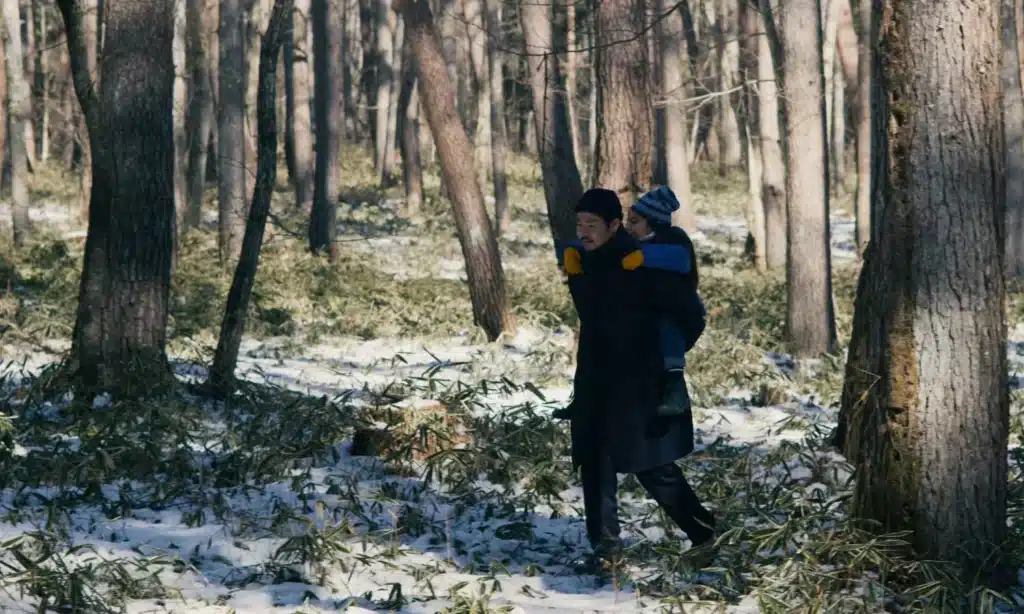
Hamaguchi’s film subtly injects political discourse into what is, at its core, an intensely contemplative film. The story unfolds through long, sweeping drone shots, introducing the audience to the forest overlooking Mizubiki, the heart of the narrative. Viewers are immersed in breathtaking landscapes and their poetic beauty, both visual and verbal, as Takumi and his daughter Hana recite the names of the trees: “dogwoods, larches, pines, Siberian ginseng, grape-leaf maples.” A magnificent scene with frozen children in the foreground, justified by part of a two-three sun, conveys a kind of symbiosis in suspended time. Very long sequences of shots, revealing some very masterful acting, further reinforce this atmosphere.
The film can still be seen on Mycanal.
Leave a Reply