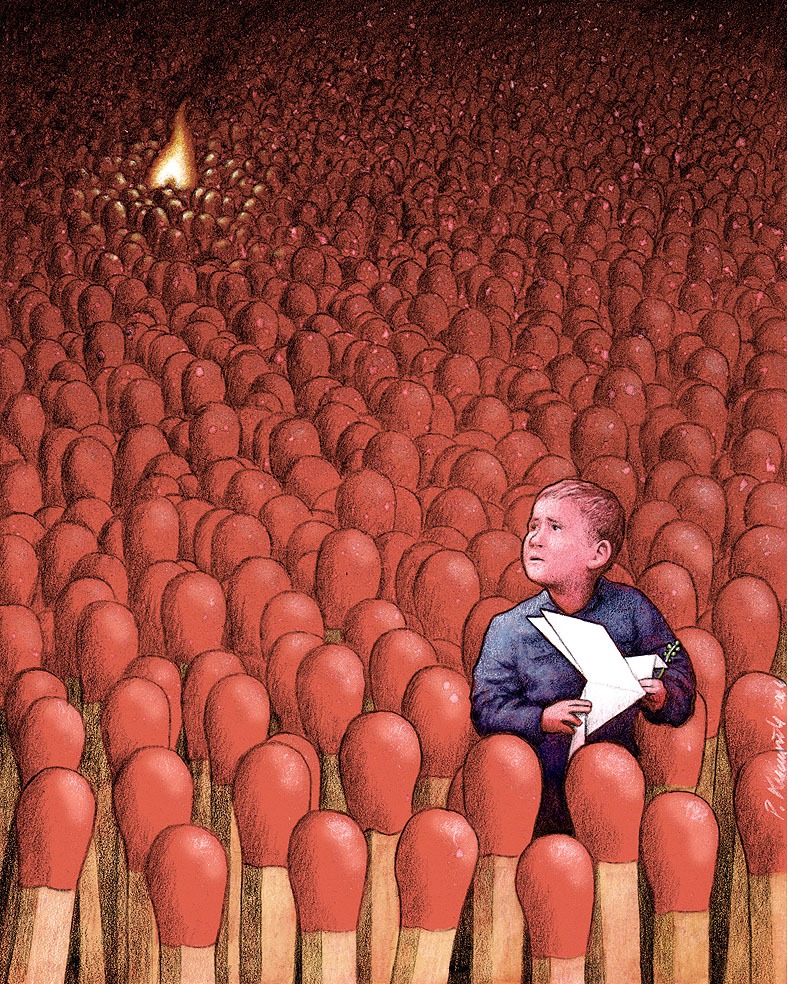
As France adopts a more martial stance in the face of international tensions, the rhetoric of war is both questionable and worrying. While the defense of democracy is emphasized, history shows that periods of conflict often undermine the rights of minorities. The return of discourse on “moral rearmament” could legitimize social hardening. In response to these challenges, citizen vigilance becomes essential to preserving individual freedoms.
An Initial Reflex of Informational Withdrawal
It was through an email titled “We Are Alone. That’s Enough.” that I learned of the abrupt cessation of military exchanges between Ukraine and the United States on February 28. At 7:45 AM on March 1, 2025, Le Grand Continent, an influential geopolitical journal, directed me to an article by Céline Marangé: After Ukraine, Russia Prepares for a European War.
Yet, the article mentioned no concrete threats against the European Union. However, it detailed the increase in Russian military resources and propaganda. A quick fact-check led me to discover that Marangé was approached in November 2023 by the French General Staff to reflect on the development of the “Moral Forces of the Nation.” This concept eerily resonates with Emmanuel Macron’s speech on March 5, 2025, about “the soul force of a nation.” Is war already here? The question is both alarming and intoxicating, wavering between historical awareness and dizziness about the future.
Have I succumbed to the prevailing anxiety like those former optimists who now yield to despair? I felt the need to disconnect from current affairs commentary for about ten days, as I did during the COVID-19 pandemic. The brutality of the American shift and the use of this nationalistic imagery compelled me to take a step back, wary of the possible resurgence of propaganda, manipulation of public opinion, the detachment of critical thinking in the face of fear, enforced submission to a public interest defined by authorities, and the binary nature of solutions.
After about ten days of informational fasting, I resumed following the news. We remain caught in a whirlwind of political positioning, but reason has not (yet?) abandoned public debate.
A Politically Destabilized France Seeking European Military Legitimacy
It is no secret that France is experiencing political turmoil. Our head of state, who seeks to act amidst global disorder, is not exempt from criticism. Emmanuel Macron’s authoritarian exercise of power contrasts with his proclaimed fight for democracy against Russian autocracy. Many political commentators rightly note his habitual use of warlike vocabulary: the war on COVID-19, demographic rearmament… “Is the president dramatizing too much?” wonders Hervé Gardette in L’Esprit Public on March 16, 2025 (Should We Treat Putin’s Russia as Our Worst Enemy?). Macron appears to be using this rhetoric to restore his legitimacy. It is well known that he thrives in tragic moments and sometimes forgets the long-term consequences of his actions.
Yet, France cannot remain passive in the face of American withdrawal and a Donald Trump who reduces the debate to a binary choice: peace at any cost, even if it means sacrificing international order. France is fortunate to have an autonomous military force, covering the entire military spectrum, though its solitary investments prevent it from being at the forefront in strategic domains like drones, long-range strikes, or air defense. Unlike Eastern European countries that must request authorization to use certain equipment (such as F-16s), France enjoys full military sovereignty and nuclear deterrence, which it could extend to other European countries.
The evolving international context strengthens France’s position in Europe. The validation of its strategic choices to maintain an army and nuclear deterrence justifies part of its public debt. Its long-ignored calls for an autonomous European defense are finally being heard. France is becoming an essential partner in this field, reinforced by its privileged ties with the United Kingdom, another nuclear power with a substantial military force. Faced with a Putin-led Russia fostering an ethnic imperialist ideology, France can reassure the Baltic states, home to significant Russian minorities, and prevent the Ukrainian conflict from spilling over into Moldova.
The Need to Defend an Idea of the Free World
France is in a position to help Europe take up the mantle of the free world. This post-World War II concept aimed to rebuild democracies through law, via “a network of national and international institutions designed to strengthen political systems and interstate relations based on fundamental human rights (protection of individuals from arbitrariness, equality before the law, separation of powers, principle of legality…), whose disregard led the continent to catastrophe.”
This stance could also bring clarity to the national political scene, countering the far-right and conservative factions that challenge these values State of law, and putting an end to endless debates on immigration—a relatively minor issue that serves as a scapegoat for the lack of vision and inability of elites to propose forward-looking solutions in the face of globalization.
However, this requires clear thinking—an increasingly difficult task in a media landscape saturated with misinformation and propaganda. Journalist Sylvie Kauffman, author of The Blinded, which critiques European elites’ lack of foresight regarding Moscow, notes the resurgence of pro-Russian lobbies in Western media since Trump’s return to the White House. In France, billionaire Vincent Bolloré’s media empire amplifies these narratives.
If the military financial effort is set to be substantial (France will double its military spending to €100 billion per year, facilitated by the European Commission’s ReArm Europe plan, which eases budgetary constraints and launches an €800 billion European loan modeled on the COVID recovery fund), its success depends on public support. As Swiss journalist Richard Werly points out, while much of the French elite supports it, the average French citizen does not.
The Necessary Concessions of a Still-Criticized French Model
Invoking the French nation will not be enough. Reassurance and persuasion are essential.
Reassurance, by dispelling confusion: France is not going to war against Russia. If rearmament is necessary, it is to maintain peace, not to wage war. An Elabe poll indicates that 64% of French citizens support continued aid to Ukraine (with 20% even favoring an increase), but 68% oppose sending combat troops. However, 67% would support sending French troops to guarantee peace if a peace agreement with Russia were signed. Additionally, 70% favor Ukraine’s NATO accession, and 56% support extending France’s nuclear protection to other European countries.
Persuasion, by moving beyond nationalistic logic. 55% of French citizens believe that France should collaborate with its neighbors to build a European defense policy. France should not exploit financial windfalls to benefit its own defense contractors but should instead foster true industrial coordination with European partners, reducing dependency on external arms purchases (with a goal of increasing European acquisitions from 22% to 60% by 2035).
We will also have to communicate our vision of nuclear deterrence, which is not that of the United States. The 290 nuclear warheads available to protect France are not enough to guarantee the security of the whole of Europe. Choices will have to be made. This possible umbrella will have to remain under exclusive French command, because only a rapid chain of command is a real deterrent. As with the American Nuclear Planning Group (NPG), zones of extraterritoriality around nuclear delivery systems will have to be established. This requires the trust of our European partners, but also of public opinion.
Trust must also be restored at the national level. And it cannot be said that Macron’s governance has fostered this trust. The politicization of the Constitutional Council, which is supposed to check presidential power, reveals its limitations. When Alain Juppé, a former prime minister appointed by Macron to the Council, breaks his duty of reserve and publicly declares, “War is returning to Europe,” “We must choose between power or vassalage,” or ‘We’re in a historic battle”. how can one trust an institution meant to limit executive overreach?
Restoring confidence requires strengthening democratic checks and balances. Only under this condition can I, as a citizen, support this militarization of society. If France wants to defend democracy, it must become more democratic itself—to avoid any suspicion of imperialistic ambitions, both externally and internally, where accusations of authoritarianism against the president persist.
The Necessary Vigilance of a Minority
As a sexual minority, I feel the dangers that war’s return may pose to my identity. Feminist activist Anne-Cécile Mailfert aptly warned in a column on January 19, 2024, that war rhetoric normalizes the idea of war, leaving indelible scars on generations.
As a sexual minority, I feel the danger that the return of war could pose to my identity. A column written by the feminist activist Anne-Cécile Mailfert on 19 January 2024 rightly recalled: “By over-dramatising, the president [hopes], as he is doing today, to mobilise and create national unity around him. (…) By using this bellicose rhetoric so lightly, Emmanuel Macron is accustoming us to the idea of war. (…) War is not a play on words, it leaves an indelible mark on generations. As a feminist, I know that war is the most brutal expression of masculine violence, in which our children, whom we educate neither to kill nor to be killed, die (…) The last time there was talk of moral rearmament was in 1938. At that time, the creators of this expression and of this movement, which claimed to be fighting for peace, were worried about the remilitarisation of Germany“.
I’m worried, but not fatalistic. French society has resources. Against all expectations, the Rassemblement National failed to win power in June 2024. Looking at the results of the Elabe poll, geographer Nicole Gnesotto emphasised the great lucidity of the French people compared to their political class. Now is undoubtedly the time for the necessary mobilisation of French and European citizens. But a vigilant mobilisation. To be continued…
Pour approfondir :
L’esprit Public Faut-il traiter la Russie de Poutine comme notre pire ennemi ? / Economie de guerre : qui doit se serrer le ceinturon ? 15 mars 2025
Arrêt sur image : Guerre en Ukraine : montagnes russes dans les médias, 14 mars 2025
Leave a Reply